
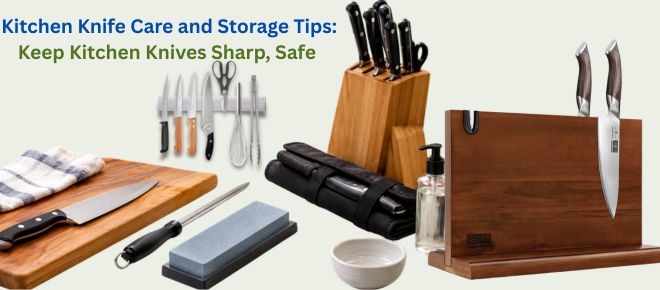
Kitchen knife care: With proper care, a good knife will last you a lifetime. A sharp knife also makes food preparation easier and safer.
Yet kitchen knife care is about more than a sharp-edged knife blade. How you wash, dry, use and store a knife also plays a difference.
Using a knife on the wrong surface can make it dull more quickly. Also run the risk of damaging other knives when wet.
The good news is that proper kitchen knife care is easy. A few good habits will go a long way to keeping your knives clean, sharp and ready to use.
This guide will teach you simple ways to care for and store your knives that you can use every day.
The Importance of Proper Knife Care
Kitchen knives are used for different jobs. Some have strong, thick blades. Some are thin-edged for clean and precise cuts.
Every time you use a knife, the edge gets some wear. Poor care can make that wear happen faster.
Proper care can help you:
- Keep the blade sharp
- Protect the cutting edge
- Reduce rust and stains
- Keep knives clean
- Make storage safer
- Help knives last longer
You don’t need a large knife set to care for your knives. Often good cleaning, safe storage and proper sharpening suffice.
1. Hand wash Kitchen Knives for Best Knife Care
- Hand washing is one of the simplest ways to care for a kitchen knife.
- Benefit from warm water, mild dish soap, and a soft sponge. Carefully wash the blade and rinse well.Don’t go from a knife in a kitchen sink full of water. The blade can strike other things.
- After washing a knife, dry the knife with a clean towel.
- Can Kitchen Knives Go in the Dishwasher?
- Dishwasher heat, strong soap, and water pressure can be hard on some knives. The blade may also hit other items during the wash cycle.
- Hand washing takes only a short time.
2. Dry the Knife After Every Wash
Do not store a wet knife. Water left on a blade can cause stains or rust.
This can be a bigger concern with carbon steel knives, which need more care than many stainless steel blades.
After washing:
- Wash your knife.
- Dry the blade.
- Dry the handle.
- Put the knife in a dry storage area.
- Do not place a wet knife inside a drawer or knife block.
- It is an easy habit to keep the blade dry, but it can aid in protecting it
3. Use the Right Cutting Board for Knife Care
Your cutting board can affect how long a knife stays sharp. Wood and good-quality plastic boards are common choices for kitchen knives. Hard surfaces can be rough on the cutting blade edge. Avoid using a sharp kitchen knife directly on:
- Glass
- Stone
- Ceramic
- Metal
- Kitchen counters
These surfaces can make an edge dull faster. A suitable slicing board gives the knife a better surface to work on. If you use Japanese knives, choosing the right board is even more important. Many Japanese knives have thin edges and must be handled with care.
4. Use the Right Knife for Each Job
A chef’s knife is useful for many everyday jobs. A cleaver is made for heavier cutting.
Using the wrong knife can damage the blade. For example, a thin kitchen knife should not be used to cut hard bones.
For vigorous work, see our guide to the best meat cleaver for cutting bone. The right knife makes the task easier and helps protect the blade.
5. Sharpen Your Kitchen Knives Care
A dull knife is more difficult to use than a sharp one. If a knife is dull, you may use more force to cut food.
A regular dose of kitchen knife care can help keep the edge in good shape.
- Hone steels
- Whetstones
- Hand Sharpeners
- Electric sharpening
- Honing and sharpening aren’t the same thing.
Honing helps keep the edge. Sharpening takes a little metal off to create a new edge. Pick a sharpening method that is right for your knife and your skill level.
6. Know When Knife Needs Sharpening
You do not need to wait until a knife becomes very dull. Your knife may need sharpening when:
- It struggles to cut food.
- You’ll need to apply more pressure than usual.
- The blade glides over the food.
- Tomatoes can be quite a challenge to cut.
- Onions are harder to chop.
- Cuts become less clean.
If you notice these signs, check the edge. Regular maintenance is often easier than trying to restore a very dull knife.
7. Store Knives Separately
Other objects may damage the blades if they collide. Loose knives also present a safety hazard if someone reaches into the drawer. There are several good ways to store kitchen knives.
Magnetic Knife Strip
A magnetic strip can keep knives off the counter and make them easy to reach. Install the strip securely. Ensure that the blade is held securely and will not fall.
Knife Block
Magnetic knife blocks are also a popular storage choice. Keep the block clean and dry. Food bits and moisture should not build up inside the slots.
Knife Drawer Organizer
A drawer organizer can be useful if you do not want knives on the counter. Choose one that keeps the blades separated. This helps prevent the knives from rubbing against each other.
8. Protect Thin and Special Knives
These knives can be stored in a blade guard or knife sheath when not in use to protect them. For sushi and sashimi, a Yanagiba is made for long, clean cuts. If you want to learn more, see our guide to Yanagiba knives for sushi and sashimi. Do not store a thin knife loose with heavy kitchen tools.
9. Take Care When Cutting Hard Foods
Some foods need to be cut with more care. One example is sweet potatoes. Their flesh is dense, and their skin is firm. A sharp knife and a stable cutting board can make the work easier. Do not force the blade through the food. If you often prepare sweet potatoes, our guide to the best knife for cutting sweet potatoes explains which types of knives may work well.
10. Do Not Leave Knives in the Sink
Leaving a knife in the sink is a bad habit. A knife under water can be hard to see. Someone may reach into the sink and touch the blade by accident. It is fine to wash the knife soon after use. Then dry it and place it in its proper storage area. This takes little time and can make the kitchen safer.
11. Pick the Right Knife for Meat Preparing
Depending on the kinds of meat preparing tasks, different knives may be required. While a chef’s knife can tackle most of the jobs in the kitchen, some tasks need specialized blades that can do the specific job much better. For instance, when it comes to brisket trimming, the right trimming knife can help you remove the unwanted fat and give you more control over the meat to make the desired shape.
If you are a home cook that likes to prepare brisket, you can look through our comprehensive guide to choose the best knives for trimming brisket . You can also use the right knife to reduce the effort needed to keep your blade in good condition.
12. Keep Your Knife Storage Clean
Knives need cleaning, and the storage area needs care. Clean the knife block from time to time and remove food bits and dirt from the slots. If you use a magnetic strip, wipe the magnetic strip with a cloth.
Clean the drawer organizer holder and the space around it. The proper storage can help you keep the knives clean and dry.
13. Avoid Cutting on Plates
Cutting food directly on a plate may seem easy. However, hard ceramic plates can be rough on the knife edge. Cutting on ceramic plates can often make knives dull faster. Use a cutting board when chopping food. Once food is cut, move it to a plate. Your small changes can help protect the knife edge.
14. Do Not Use a Knife as a Common Tool
- A kitchen knife should be used for cutting food.
- Do not use the blade to open packages, pry objects, scrape hard surfaces, or perform other jobs that can damage the edge.
- The cutting edge is designed for cutting, not for prying or twisting.
15. Be Careful When Cutting Onions and Other Vegetables
Good practices can also help you to take better care of your knife
When chopping onions and other vegetables, use a stable cutting board to keep the food from slipping and use gentle but firm motions to make thin slices. Do not press hard. For more information on what to look for when buying a knife for this type of food preparation, you can consult our guide to choosing a knife for chopping onions.
A good sharp knife and good technique can make all the difference when preparing food with thin slices regularly
Knife Care Mistakes to Avoid
- Various bad habits can shorten the lifespan of your knife
- Avoid the following actions:
- Leaving Knives Wet
- Excess dampness can cause staining and rust. Dry the blade after washing.
Putting Knives in the Dishwasher
The heat and strong detergent can be hard on some knives. Hand washing is a better choice for quality blades.
Cutting on Hard Surfaces
Glass, stone, and ceramic can wear down a sharp edge. Use a suitable cutting board instead.
Throwing Knives Into a Drawer
Knives should not touch other kitchen tools. Use a knife holder or organizer.
Using the Wrong Knife
Do not use a thin knife for a heavy task. Choose a blade that fits the job.
Using Too Much Force
A sharp knife should not need a lot of weight. If you have to push hard, check the blade and your cutting method.
A Simple Knife Care Checklist
Use this quick checklist to keep your knives in good shape:
- Wash knives by hand.
- Dry them after washing.
- Use a proper cutting board.
- Make sure the blades do not come into contact hard surfaces.
- Use different knives for different tasks.
- Store the knives separately.
- Keep knife storage clean.
- Protect thin blades with a guard when needed.
- Never make use of a kitchen knife as a pry tool.
Following these simple steps can make daily knife care much easier.
Final Thoughts
Good kitchen knife care does not need to be hard. Wash your knives by hand. Dry them after use. Use a good cutting board and choose the right knife for each job. Keep sharp blades separated during storage. These simple practices will keep your knives sharp, clean, and safe. A good knife is an investment in your cookhouse. Taking a little care after each use can help it perform well for a long time. For more practical knife guides, product comparisons, and kitchen tips, explore Knives Area.
FAQs
How often should I sharpen my kitchen chef knives?
It relates to how often you use them. As a rule of thumb, sharpen them when they start to feel dull.
Is it advisable to wash kitchen knives by hand?
Yes. Hand washing gives you better control and helps reduce the wear that can come from a dishwasher.
What is the appropriate way to store kitchen knives?
The most appropriate way to store kitchen knives is in a block, on a magnetic strip, or in a knife drawer.
Can I use a chef’s knife to cut bone?
A regular chef’s knife is not made for heavy bone cutting. Use a knife designed for that class of work.
How can I keep kitchen knives sharp?
The way to cut tough food is to use a quality cutting board. And never cut directly on a hard surface. The right knife for the task, and remember to sharpen the blade regularly. In addition, it is necessary to keep knives clean and dry after use.
Should I put a wet knife in the knife block?
No, it is necessary to dry the knife.