
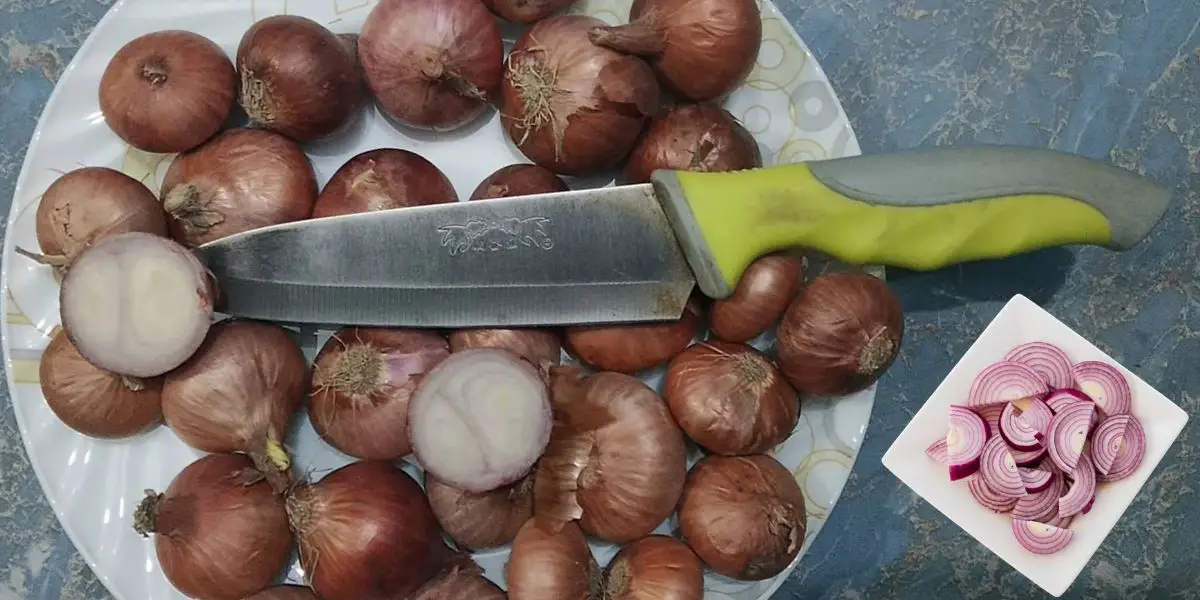
We’ve all been there. You’re halfway through making dinner and feeling like a kitchen wiz. Then all of a sudden your eyes begin to sting. Moments later, you’re crying and can’t even see the cutting board anymore. That’s why learning how to chop an onion without crying is a total game-changer for anyone who loves to cook.
Chopping onions is a daily chore for most home cooks, but it remains one of the most annoying parts of making a meal. You might have seen crazy tricks on the internet. Like eating a slice of bread or wearing swimming goggles while you cook. Goggles work, in a technical sense, but nobody wants to look like. They’re going to jump in a pool to make spaghetti sauce.
The good news is you don’t have to use silly kitchen hacks to save your eyes. As long as you know why onions make you cry in the first place. It’s surprisingly easy to stop the crying. Here’s everything you need to know about how to chop an onion without crying. Using practical methods that really work in a real kitchen.
Why Do Onions Make You Cry?
Before we get into the fixes, it helps to know what’s really happening to your cutting board. Onions grow underground, and they have natural defenses to keep hungry animals from eating them.
When you dice an onion, you break open tiny cells. This releases enzymes that react with sulfur compounds in the onion. Producing a faint invisible gas called syn-propanethial-S-oxide.
This gas rises straight up into the air. It creates a very mild acid when it gets into the moisture of your eyes. Your eyes immediately panic, sting, and produce tears to wash the irritant away.
Notice the key trigger here: breaking and crushing the onion’s cells. The more cells you smash, the more gas shoots into the air. Keep that in mind because it’s the secret to the single best fix on this list.
1. Use a Razor-Sharp Knife (The #1 Fix)
If there is one piece of advice you take from this entire guide, let it be this: stop using a dull knife.
A dull blade pushed through an onion does not make a clean cut. Instead, it bruises and breaks the layers of the onion. Rupturing thousands more cells, spewing out a vast cloud of eye-stinging gas. A razor-sharp blade slices through the flesh. Leaving most of the cells intact and keeping that gas sealed inside the onion where it should be.
The difference in your daily prep work is nite and day when you upgrade your blade. Suppose your current kitchen knife has a hard time slicing a ripe tomato without squashing it. It’s definitely making you cry over your onions. The best knife for chopping onions will cut your prep time in half and save your eyes from endless irritation.
Give your chef’s knife a couple of quick strokes on a honing steel before you start chopping. You’ll feel that stinging sensation go away instantly.
Before you start chopping, run your chef’s knife a few quick times on a honing steel. You will feel a reduction in the sting immediately.
2. Chill the Onion Before You Chop It
In cold temperatures, chemical reactions slow down. When the onion is cold, the enzymes that cause tears move much more slowly. So a lot less gas goes into the air while you chop.
The Fridge Method: Before you start cooking, throw your onions in the fridge for about 30 to 45 minutes.
The Freezer Shortcut: In a rush? Right before you prep, put the onion in the freezer for 10-15 minutes. Don’t forget about it, because a frozen onion becomes mushy when thawed.
Pro Tip: Don’t keep your onions in the fridge forever. Cold, damp air breaks down starches in onions and converts them to sugar, making them soft and ruining them faster. Keep the ones you plan to use that day in the fridge.
3. Get the Onion Cutting Technique Right (Leave the Root Intact)
It’s half about how you slice the onion, half about what you slice it with. The big mistake most people make is cutting off both ends right away.
The hairy root end of the onion contains the highest concentration of those sulfur compounds. If you cut right through the root, you will release the worst of the gas right at the start. Also, the root serves as a natural handle that keeps the onion intact while you work.
Here are some easy steps to a cleaner, tear-free dice:
- Cut off the stem end (the pointy top) and then remove the papery skin. Do not cut the onion root or the hair on it.
- Slice the onion in half straight down through the middle of the root. Place both halves flat-side down on your board so they do not wobble.
- Make horizontal cuts toward the root, stopping about a quarter-inch before you hit the end. (Skip this step if you want a quick, everyday chop—the onion’s natural layers already do half the work for you).
- Make vertical slices from top to bottom, again stopping short of the root.
- Slice across the onion from the stem end toward the root end. You will get neat, even dice with minimal cell damage.
- Toss the root in the trash when you are done.
4. Turn On Your Stove Vent or a Kitchen Fan
Since the irritating gas rises straight up from your cutting board, your goal is to blow it away before it reaches your face.
Set your cutting board right next to your stove and turn the overhead exhaust fan on high. The vent will pull the air—and the onion fumes—up and away from your eyes.
If your stove fan is weak or recirculates air back into the kitchen, grab a small desk fan. Set it on the counter so it blows gently across your cutting board, pushing the fumes away from your body. Make sure the breeze is not blowing toward someone else in the room!
5. Cut Near Running Water or Use a Damp Paper Towel
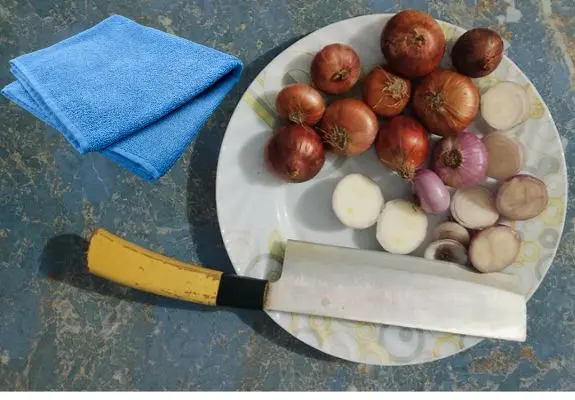
Water acts like a magnet for onion gas. Remember how the gas attacks the moisture in your eyes? If you give that gas another source of water to latch onto first, much of it will never reach your face.
The Damp Towel Trick: Fold a paper towel, soak it in cold water, and lay it flat on your cutting board right next to the onion. It sounds too simple to work, yet it traps a surprising amount of the rising fumes.
The Sink Method: If your counter space allows it. Set your cutting board right next to the kitchen sink with a thin stream of cold water running. The moving water pulls air toward the drain and absorbs the gas.
6. Try a Quality Vegetable Chopper
Sometimes you just want dinner on the table fast without worrying about your knife skills. If you meal prep big batches of soups, stews, or salsas, a manual push-style chopper and knife combo can save your life. Learning how to chop an onion without crying often comes down to trapping those irritating fumes before they hit your eyes.
These handy gadgets use sharp, stainless-steel grids to dice an entire onion in one quick press. Because the chopped pieces drop straight into a sealed container underneath, almost none of that stinging gas escapes into your kitchen. Plus, the slick blades keep onion bits from drying onto the metal, which makes cleanup a breeze.
7. Insert your contact lenses (if you have them)
If you wear glasses and contacts, wear your contacts on heavy prep days. Contact lenses sit right on top of your corneas and act like a physical barrier to the gas floating around. Glasses wearers still get hit because the fumes easily sneak behind the frames. But a lot of contact lens wearers find that they barely cry when they cut onions.
8. Cut Underwater (Small Quantities)
If you have extra-sensitive eyes and only need to dice one or two bulbs, try working inside a large bowl of cold water. Submerging your hands and knife instantly traps the irritating fumes before they reach your face. It is one of the easiest tricks when learning how to chop an onion without crying.
Cutting underwater feels a little awkward at first, and your slices will come out wet. Still, this method works like magic if you already plan to soak your onions to tone down their sharp bite.
9. Use Sweet Onions
Not all onions are the same. Yellow and white onions have higher sulphur content. This gives them their sharp flavour. This can be harsh on your eyes.
If your recipe allows, then switch to using Vidalia, Walla Walla, or Maui sweet onions. These have higher water and sugar content and less sulphur, meaning they’re much kinder to your eyes. They also taste amazing raw or cooked.
Common Kitchen Myths
The internet loves a quirky kitchen hack, but most onion hacks won’t do anything and will make you look foolish. Avoid these myths:
- Chew gum or hold a piece of bread in your mouth – This is supposed to soak up the fumes however. They will still go straight to your face.
- Burn a candle – People say the flame will burn off the sulphur gas however. Unless you’re cutting your onions in the flame, a small candle won’t help.
- Lemon juice on the blade – Whilst the acid can change the pH of the surface of the onion. It will wear off after the first slice and won’t help.
Fast Tips For Tear-Free Cutting
Next time you need to dice your onions, follow this quick list:
- Use a sharp chef’s knife.
- Chill your onion in the icebox or fridge for 30 minutes.
- Keep a wet paper towel handy or use a small fan.
- Don’t cut the hairy root.
FAQs
Why do some onions make me cry more?
Older onions and those grown in sulphur-rich soil will produce a lot more stinging gas. Freshly picked onions and sweet onions (Vidalia) will have less sulphur and won’t make you cry as much.
Will rinsing a peeled onion help?
Rinsing the outside of a peeled onion will help by removing the surface juices however. Each time you cut, you’ll open new cells.
What is the best knife to cut onions?
A thin, Sharp Knife is best. An 8-inch chef’s knife or 7-inch Santoku knife. A thin blade will cleanly cut through the layers.
Can I chop my onions in advance?
Yes! Store your chopped onions in an airtight glass jar in the fridge for up to 7 days. Glass is a much better option than plastic, as plastic will absorb the strong smell of the onions.
Final Words: No More Tears at the Cutting Board
Learn how to chop an onion without crying in your daily kitchen routine. You don’t have to dread dinner prep or wipe away tears. Chill your onions before you start, set up a small fan near your board, or reach for a razor-sharp blade.
A sharp knife slices through cells cleanly instead of crushing them. This keeps those irritating fumes out of the air. Pick one or two tricks from this guide and test them tonight. Once you master how to chop an onion without crying. Cooking feels faster, safer, and way more enjoyable.