

The best Yanagiba knives typically feature long, thin, and extremely sharp blades. Yanagiba knives are also known as sushi and sashimi knives. Yanagiba knives are a little expensive. You want to cut raw fish, vegetables, rolls, and other foods. Then there is no substitute for this knife. Is also called a sushi or sashimi knife in Japanese (Yanagiba).
A sushi knife, used to cut fish or food pieces, looks great. Dishes will look great when presented. Many countries around the world, except Japan, use these terms interchangeably. The Yanagiba blade is a single-bevel blade for sashimi and sushi. In this guide, we cover popular yanagiba knives, with different sizes and price points. We also tell you what to look for before you buy one.
Quick Answer: Best Yanagiba Knife?
The right Yanagiba depends on your skills, budget, and the fish you prepare.
A 270mm Yanagiba is a useful size for many home cooks. A 300mm edge gives you more length for long cuts. But it needs more space and practice.
If you are new to Yanagiba knives, a lower-cost model can be a good start. More skilled users may prefer a classic Japanese knife made from high-carbon steel.
Best Yanagiba Knives at a Glance
| Yanagiba Knife | Blade Length | Best For |
| Hoshanho sushi knife | 10 inches & 12° Edge | Classic Japanese knife |
| Kyoku Samurai Series Yanagiba | 10.5 inches | Beginners and home cooks |
| Masahiro Yanagi Blade | 270mm / 10.2 inches | Fish slicing |
| Kankikusui Sashimi Knife | 11″ Single-beveled blade | Home cooks |
| Kai Wasabi Black Yanagiba | 8.25 inches | Beginners |
| Hezhen Yanagiba Knife | 16.61 inches / 270mm | Fine fish cuts |
| Mercer Culinary Yanagi | 6-inch blade | Home sushi prep |
| Dexter Yanagiba Kitchen Knife | 9° single-edged 8.2-inch blade | Skilled users |
Below are the best Yanagiba knives and sushi-making kits reviewed-
1. HOSHANHO Japanese Sashimi Knife – Best Japanese Sashimi Knife
Best for: Sushi, sashimi, and fish filleting.
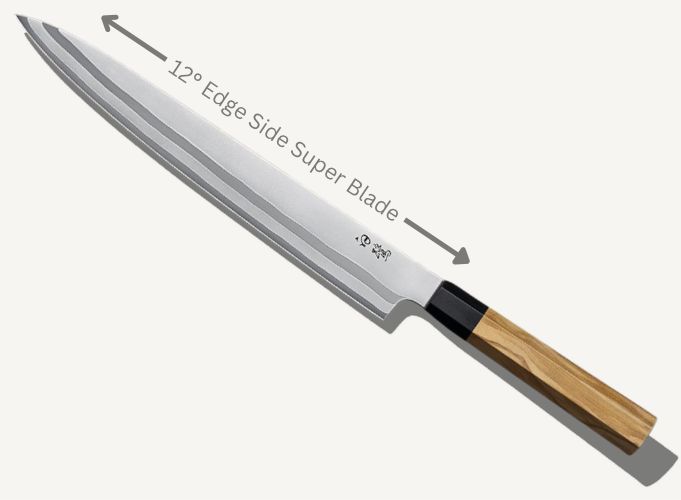
The HOSHANHO 10-inch Sushi Knife is for fish and sushi. It has a long blade. Helps you make thin cuts. It is good for home cooks. This sushi knife is a long slicing knife designed to cut fish into thin slices for sushi and sashimi. This is a traditional Japanese knife. It’s a chef’s choice. The elegant thin blade slices fish with one smooth stroke. Not used for cutting bones, nuts, or frozen foods. It’s a high-carbon steel sushi sashimi knife, carefully crafted by master craftsmen.
Washing: Wash the Yanagiba knife by hand with mild soap and warm water. Drying: Dry the blade right after washing. This helps stop rust and stains.
Key Features:
- Carbon steel knife and Olive wood handle
- For fish and sushi.
- Good for thin cuts.
- 12° bevel angle and weight: 6.4 ounces
| Pros: | Cons: |
| Long blade. | May take time to use. |
| Good for fish. | Not for most kitchen tasks. |
| Good for sushi. |
2. KYOKU Samurai Yanagiba – Best Yanagiba Knives for the Money
Best For: Slicing raw fish. Making long, clean cuts. Home cooks who want a Yanagiba-style knife. Chefs who like a single-bevel blade
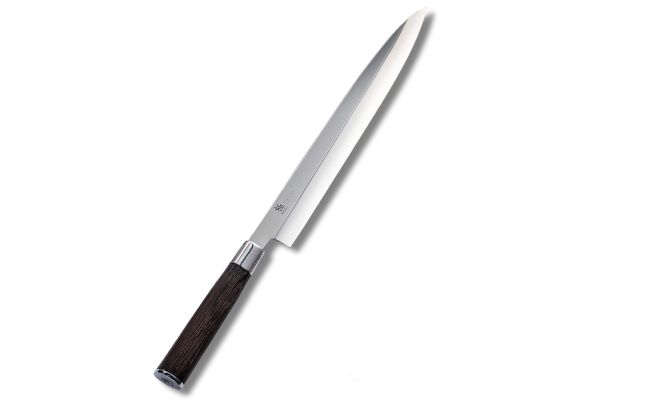
Compared to other valuable Yanagiba sushi knives for sushi and sashimi.KYOKU: this low-priced knife is much higher quality. This knife will become a natural extension of your kitchen craft. The cutting edge of cutlery. The knife is specially made for Japanese cuisine. The Yanagiba knife is ready to slice raw fish fillets into thin strips.
Washing: To prevent corrosion, wash the knife by hand and dry it with a dry cloth after use. Use a honing rod regularly. Store this knife in a knife block or sheath.
Key Features:
- Yanagiba blade, 1.25 pounds
- High-carbon steel knife
- Hardness for good edge retention
- Wenge wood handle
- Single-bevel edge
| Pros: | Cons: |
| Very sharp edge | The single-bevel blade takes time to learn |
| Long 10.5-inch blade | Hand wash and dry it with care |
| Comfortable Wenge wood handle | The long blade may be hard for beginners |
| Holds its edge well | Not a knife for all kitchen tasks |
| Comes with a case | |
| Good for sushi and sashimi |
3. Masahiro Fukui Stainless Steel Yanagiba – Best Sashimi Knife
Best For: Making sushi and sashimi. Slicing raw fish. Making long, clean cuts. Home cooks who want a Yanagiba-style knife. Chefs who like a single-bevel blade
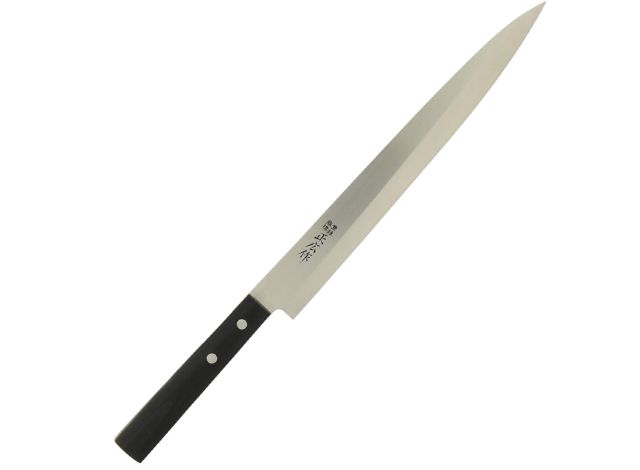
Masahiro Yanagiba is an excellent length. This knife is for cutting most fish for sushi or sashimi. Masahiro’s knife is an excellent Japanese knife with corrosion resistance and long-lasting durability. The knife’s thin blade lets you cut the maki rolls into pieces. Below the gloss is no-nonsense steel that can handle. You get that result in a $300 yanagiba knife for slicing fish. You get the same results with this $100 worth of a yanagiba knife.
Washing: Wash the knife with mild detergent after use. Avoid cutting hard objects; keep the knife sharp. The easiest way to sharpen this knife is to use a honing rod.
Key Features:
- Plain-edged Yanagiba blade
- High-carbon steel with an HRC of 56–58 for strong edge retention.
- Single-bevel edge 11–13° on one side.
- Protective case included
| Pros: | Cons: |
| Sharp edge | The single-bevel edge may take time to learn |
| Long 10.5-inch blade | Hand wash and dry the knife with care |
| Comfortable Wenge wood handle | The long blade may feel hard to use at first |
| Good edge hold | Not made for all kitchen tasks |
| Good for sushi and sashimi |
4. KANKIKUSUI 11-Inch Sashimi Knife – Best Knife for Sashimi
Best for: Sashimi and fish.
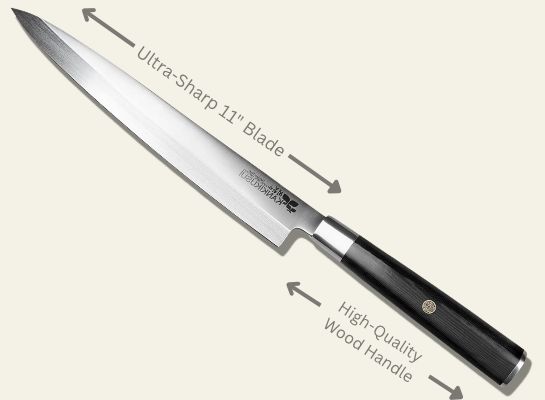
This sashimi sushi knife with a wooden sheath is for sashimi and fish. It has a long blade. Helps you make thin cuts. It comes with a wooden sheath. The sheath helps protect the blade when it is not in use. It is good for sashimi and sushi. This yanagiba sushi knife combines technology and tradition. Coincidentally, this is the best affordable Yanagiba knife in my reviews. From materials to craftsmanship. From the manufacturer to the quality. To get a high-quality Yanagiba sushi knife at an affordable price.
Washing: To care for Yanagiba knives, hand wash with warm, soapy water after use. Dry after washing. Sharpen the blade using a honing steel and store it on a magnetic strip to prevent damage.
Key Features:
- 11-inch blade
- Wood sheath
- Made for sashimi
- 17 inches knife
| Pros: | Cons: |
| Long blade | Needs care when used |
| Comes with a sheath | May feel big for new users |
| Good for thin fish cuts |
5. Kai Wasabi Black Yanagiba Knives – Best Japanese Sushi Knife
Best For: Fish for sushi and sashimi. Boneless fish fillets. Home cooks who want a Japanese fish knife.
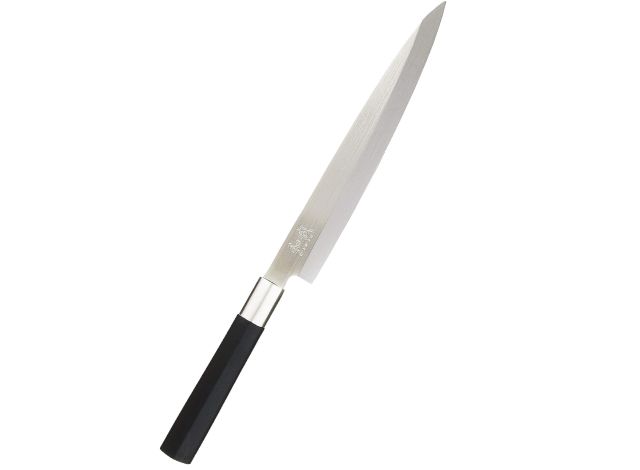
We need good-quality knives at low prices. Kai Wasabi is one such company. They make world-class knives. Our selected Kai Wasabi black yanagiba knife is an excellent sashimi and sushi knife. The Yanagiba knife has an irresistible cutting performance. The polypropylene handle helps keep food super clean. Made with high-carbon stainless steel (Daido 1K6) for durable edge retention. This knife has a 16-degree cutting edge. This knife is from European-style knives.
Washing: Use the right cutting board to avoid dulling the blade. Clean the knife immediately after use and dry out it. Use a whetstone or honing rod to sharpen this knife blade.
Key Features:
- 8 1/4-inch high-carbon steel blade.
- Japanese Yanagiba style.
- Easy-grip handle for smooth cuts.
| Pros: | Cons: |
| Excellent Knife for Beginners | It can be small for cutting large pieces with an 8.5-inch knife. |
| Japanese Yanagiba Knife | |
| Super-sharpened knife. |
6. HEZHEN 270mm Yanagiba Knives – Best Knife to Cut Sushi Rolls
Best for: Sashimi, sushi, and fish
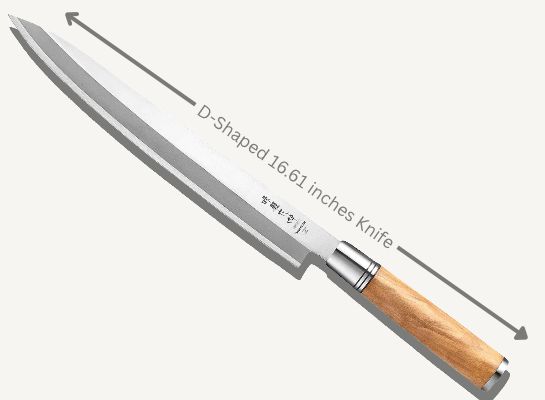
The HEZHEN 27-centimeter blade Yanagiba is made for fish. It has a D-shaped olive wood handle. It comes with a sheath. Its long blade helps make thin cuts. A Yanagiba knife for sashimi and fine cuts. The simple design is known for its sharp blade and fine work.
Washing: Proper maintenance is essential to preserve the sharpness and longevity. Wash Hezhen knives by hand with mild soap and warm water, avoiding the dishwasher. Be sure to dry after rinsing. Store the knife in a block or sheath.
Key Features:
- Silver-colored stainless steel blade, wood handle knife
- 16.61 inches knife
- D-shaped wood handle
- Comes with a sheath
| Pros: | Cons: |
| Long blade | Needs some use to get used to |
| Olive wood handle | Made mainly for fish |
| Comes with a sheath |
7. Mercer Culinary Yanagi Sashimi Knife – Best Yanagiba for Beginners
Best For: Sushi and sashimi, slicing raw fish. Making long, clean cuts. Home cooks who want a Yanagiba knife.Cooks who like a single-bevel blade.
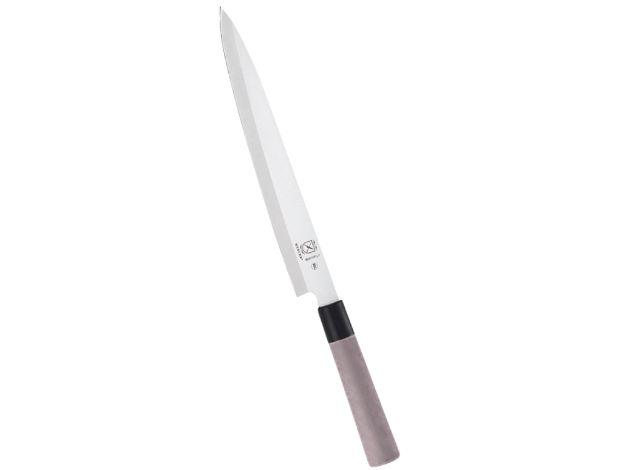
The Yanagi Sashimi Knife is specially designed for slicing sashimi. Traditional Japanese raw fish that is sliced. The knife features a long, thin blade.
Washing: Wash hands with warm water and mild soap after using the knife. Dry completely with a soft towel. Please do not put this sashimi knife in the dishwasher.
Key Features:
- Stamped 10.5-Inch Yanagiba blade
- High-carbon steel, silver-colored blade
- Santoprene wenge wood handle
- Other single-bevel edge
| Pros: | Cons: |
| Very sharp edge | Hand wash and dry the knife after use |
| 6.3-ounce long blade | The long blade may be hard for new users |
| Easy-to-hold Wenge wood handle | |
| Good edge life |
8. Dexter Sashimi Yanagiba Kitchen Chef Knife – Best Sushi Knife
Best For: Making sushi and sashimi. Slicing raw fish. Making long, clean cuts. Home cooks who want a Yanagiba-style knife. Cooks who like a single-bevel blade
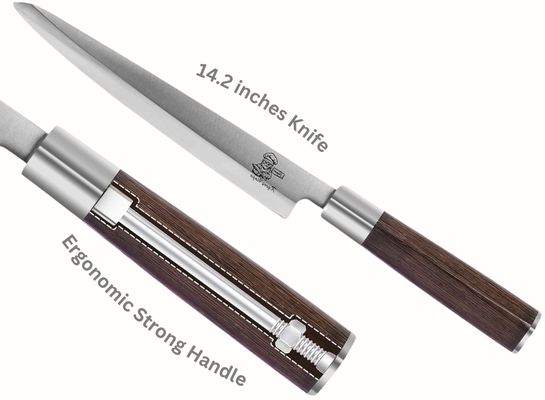
Dexter sashimi knife is a specific type of sashimi knife. The 20.83 cm blade-length knife belongs to the Dexter line. These knives are known for their high quality. For your home kitchen or professional kitchen. Precisely slice and cut sashimi ingredients. Thin fish and other ingredients more easily. Extra sharpness reduces the risk of damaging delicate sashimi ingredients.
Washing: Hand-wash the knife with mild detergent. Avoid using cleaners or scrubbing pads that can scratch the blade.
Key Features:
- The handle is sakura wood.
- AUS-8 cutting core Japanese carbon steel
- Ryorininja Gale 3 Pro steel blade
- Single bevel blade
- The edge remains intact even with frequent use
| Pros: | Cons: |
| Precision and sharpness of the 8.2 inches blade | This professional-grade knife costs more than basic kitchen knives. |
| Durability, Versatility, sashimi 14.2 inches knife | |
| Plain blade knife made in Japan | |
| Ergonomic grip handle and non-slip feel |
What Is a Yanagiba Knife?
A Yanagiba is a Japanese knife designed to slice raw fish. The blade is long, thin, and narrow. Many Yanagiba knives have one sharp side. This is called a single-bevel edge. It helps make clean, thin cuts with less damage to the fish. Yanagiba knives are often used to make sashimi. They also work well for other soft foods that need thin slices. A Yanagiba is not an all-purpose knife. Do not use it to cut bones, frozen food, or hard foods. For a knife that can do many kitchen tasks, see our [Ultimate Guide to Kitchen Knives].
What Is a Yanagiba Knife Used For?
A Yanagiba is mainly used for:
- Slicing raw fish
- Making sashimi
- Cutting fish for sushi
- Making thin, clean slices
- Slicing other soft foods
The long blade lets you use a smooth pull. You do not need to chop back and forth. This makes a Yanagiba different from a chef’s knife.
A Yanagiba is made for thin slices, mainly raw fish. It is not for hard foods. If you often cut sweet potatoes, use a knife made for that job. See our other guide to the Best Knife for Cutting Sweet Potatoes.
Yanagiba is not a chef’s knife. For daily jobs like chopping vegetables, a chef’s knife is more useful. See our guide to the Best Knife for Chopping Onions.
A Yanagiba is made for clean, fine slices. It is not made for heavy meat work. If you cut brisket, use a good trimming knife. Look at our guide to the Best Knife for Trimming Brisket.
How to Choose the Best Yanagiba Knives
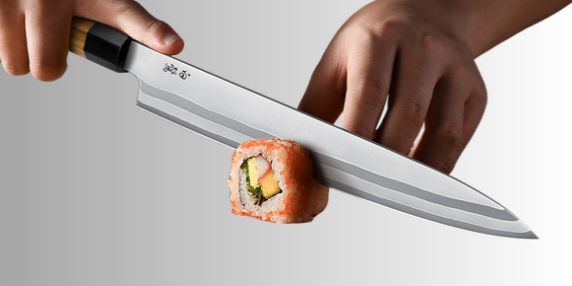
Choosing a Yanagiba is about more than sharpness. Blade size, steel, bevel, and care all matter. Key factors that a chef considers in choosing the perfect Yanagiba sushi knife for his needs are:
Choose the Right Blade Length
Yanagiba knives come in many sizes.
- 210mm
- A 210mm knife is easy to use. It can fit in a small kitchen.
- 240mm
- A 240mm blade gives you more room for each cut. It is still easy for many home cooks to handle
- 270mm
- A 270mm Yanagiba gives a good mix of length and control. It is a common choice for home use.
- 300mm
- A 300mm blade gives more space for long cuts. It can help with large pieces of fish. It also needs more skill and storage space.
Check the Steel
Yanagiba knives use different types of steel. High-carbon steel can stay very sharp. But it needs more care. It can also rust if it is left wet. Stainless steel is easier to care for. It also resists rust better. If you are new to Japanese knives, stainless steel can be easier to use.
Check the Bevel
Most old-style Yanagiba knives have a single bevel. The bevel is the sloped part of the blade. It forms the cutting edge. A single bevel can help make clean cuts. But it may take a while to learn how to use it.
Choose the Right Handedness
Many Yanagiba knives are made for right-handed users. If you are left-handed, check the product details before you buy. Some brands make left-handed models, but they are less common. Don’t assume one Yanagiba will work the same for both hands.
Blade
Yanagiba knives are the best, with lengths from 180mm to 360mm. Longer blades are perfect for larger fish. Shorter-diameter blades offer precision for smaller cuts. A sushi knife blade must have a razor-sharp edge. The sushi knife (Yanagiba) edge should remain sharp for a long time. The blade must have a stiff spine.
Knife Handle
Yanagiba usually has wooden D-shaped or octagonal handles. The Pakkawood (such as ho wood or magnolia) is great. They crack or break when exposed to temperature changes. The knife needs to be comfortable.
Blade Thickness
A thin blade is important for slicing fish. Choose a thin blade for preparing sashimi. Look for a Yanagiba with thin, sharp edges for sashimi.
Single Bevel vs. Double Bevel
When choosing a sushi knife, consider a single-bevel knife. Yanagiba knives have a single bevel on one side of the blade. A single bevel blade allows for precise thin slicing. Now, Yanagiba knives can have a double bevel for novice chefs.
Weight Balance
You need to feel comfortable in your hands while cutting fish. When buying a knife, consider the weight distribution between the blade and the handle.
Maintenance
This expensive knife needs maintenance. Emphasize sharpening and cleaning after use. Traditional high-carbon steel blades need more care than ordinary knives to control rust.
Yanagiba Knives VS Sujihiki Knife
Yanagiba and Sujihiki sharp blades look similar. Both have long, narrow blades.
- The main difference is the edge design.
- A traditional Yanagiba has one bevel. It is made for clean fish slices.
- A Sujihiki has two bevels. It works well for many slicing jobs.
Choose a Yanagiba if you mainly make sashimi. Choose a Sujihiki if you want one long knife for many slicing tasks.
How to Care for a Yanagiba Knife
A Yanagiba can last for years with good care. Follow these easy steps.
- Wash your Yanagiba by hand. Do not use a dishwasher unless the maker says it is safe.
- Dry the blade after each wash. Water can cause rust, mainly on carbon-steel knives.
- Use a soft cutting board. Avoid hard boards that can damage the thin edge.
- Do not cut bones with a Yanagiba. Do not cut frozen food. These jobs can harm the thin blade.
- Keep the knife in a sheath or knife block. Safe storage helps protect the thin blade.
- Use a whetstone to keep the edge sharp. If you are new to single-bevel knives. Learn the right way to sharpen them.
Do not use a Yanagiba on bones or hard food. Its thin blade can get damaged. For bones, use a meat cleaver. See our other guide to the Best Meat Cleaver for Cutting Bone.
FAQ (Frequently asked questions)
How to Sharpen a Yanagiba Sushi and Sashimi Japanese Knife?
- A Yanagiba has one sharp side. So, it needs care when you sharpen it. A water whetstone works well for this knife.
- Do not use a pull-through or electric sharpener. For the full guide, read [How to Sharpen a Yanagiba Sushi and Sashimi Knife].
What is a Yanagiba knife used for?
- The Yanagiba to slice raw fish for sushi and sashimi. A long, thin blade slices cleanly and smoothly.
Is a Yanagiba good for beginners?
- Yes, but it is a special knife. A 210mm or 240mm Yanagiba sushi sashimi knife may be easier to control. A 300mm knife needs more space and care.
What size Yanagiba should I buy?
- A 270mm Yanagiba is a good size for many users. A 210mm knife is easier to handle. A 300mm knife works well for long cuts.
Are Yanagiba knives single bevel?
- Traditional Yanagiba knives are usually single bevel. Check the product details before you buy. Some newer models may have a different edge.
Can I use a Yanagiba to cut bones?
- No. A yanagiba is a type of thin-bladed slicing knife. Do not use it on bones, frozen food, or other hard items. These can damage the edge.
Can a left-handed person use a Yanagiba?
- Yes. Choose a left-handed model if you want one. Many traditional Yanagiba knives are for right-handed users.
Is a Yanagiba only for sushi?
- No. A Yanagiba is for sushi and sashimi. It can also slice other soft foods. It is not a general-purpose knife.
How do I clean a Yanagiba knife?
- Clean a Yanagiba knife by hand with mild soap and water. Dry the blade well before you store it. Do not use a dishwasher unless the maker says it is safe.
Final Thoughts
The right Yanagiba knife is what you need. For a traditional Japanese knife, look for the Yoshihiro or Tosa model. In search of a 270 mm blade? Compare the Masahiro and Hezhem sashimi models.
For new users, the Kai Wasabi Black and Kyoku models are easy picks. The Mercer Culinary is also a good bet for home sushi and sashimi.
Blade length, steel, bevel, handle, and care needs. And make sure the knife fits your hand. Sushi and sashimi are for one primary purpose: slicing fish.