

How to Clean Rust Off Knives-Rust is tough to remove from any knife. This often occurs if the blade stays wet or dirty. The good news is that you can remove many small rust spots at home.
The best way to remove rust from knives depends on the steel type. You can remove light rust with baking soda or a rust eraser knife. If the rust is bad you may need to call a professional. Follow this guide to clean a rusty knife, save the blade, and stop rust from coming back.
Quick Steps to Removing Rust From Knives
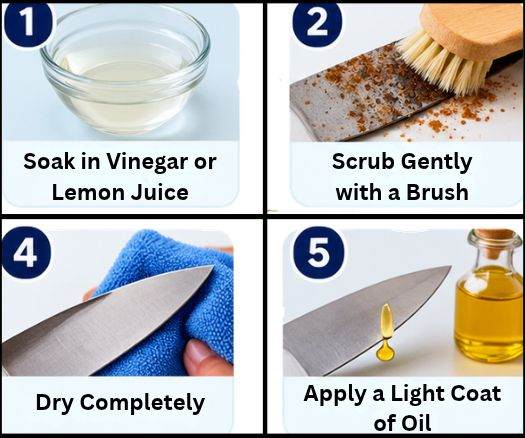
For light rust: Wash knife with mild soap and water. Wipe the blade with a clean rag. Baking soda and little bit of water. Spread the paste over rust spots. Use a soft cloth to rub the spots. Wash the blade. Dry the knife blade completely. Keep your fingers away from the sharp edge. Do not rub too hard. Try the method on a small area first.
What Causes Knives to Rust?
Steel + water + air = rust. Some knives rust more easily than others. Typical causes include the blade staying wet after use and cleaning a dirty knife. Cutting salty or acidic food without washing the knife. Knife Storage in a Wet Environment. Dishwasher Knives. Using a carbon steel knife with no care. Stainless-steel knives can even rust. Stainless steel can withstand rust; it’s not totally rust-proof.
5 Ways To Remove Rust Off Knives
1. Baking soda
Baking soda can remove light rust from some knife blades. You will need:
- Bicarbonate of soda
- Water
- Soft cloths
- Mild liquid soap
- A towel, clean
Steps:
Wash the knife in soap and water. Wipe the blade dry. Mix a small-scale water into the baking soda to form a paste. Spread the paste over the rust marks.
Gently rub the knife with a soft cloth. Rinse all of the paste off. Dry the blade immediately. Don’t push hard. Baking soda can scratch certain blade finishes. Best for Small rust spots on everyday kitchen knives.
2. Knife Rust Eraser
A knife rust eraser removes rust from metal. It may work on areas baking soda can’t.
Steps:
Read care tips on the product. Dry and clean the knife. With the eraser rub the rust spot. Apply light pressure. Check the blade as you progress. Wipe off all the residue; dry the knife. Only use a knife-safe eraser. Some can scratch a smooth blade. Best for stubborn rust spots on blades that can be cleaned this way.
3. Care With White Vinegar
The acid in white vinegar can help to loosen rust. But it can also damage some knife blades. Use it only if the manufacturer says it’s safe.
Steps:
Refer to the knife care guide. Moisten a cloth with a little white vinegar. Just hold it on the rust spot for a short time. Watch the blade often. Take away the cloth. Rinse the blade well. Dry it immediately. Don’t leave knives in vinegar for hours or overnight. Do not use this method on a coated blade or a knife with a fine finish unless the maker permits it. Do not use this method on a coated blade or a fine-finish knife unless the maker allows it. Best for certain plain steel knives, if the care guide permits.
4. Apply a Safe Metal Polish
Light rust can metal polish. However, not all polish is safe for knives used to cut food.
Before you use a Polish: Make sure it is safe for the blade. Read the label. Do not put it on the cutting edge unless the label says it is safe. Rinse off all residue from the label. Do not polish food blades with car polish or machine oil unless the product is specified as safe for that use.
5. Seek help for deep rust
Small rust spots are easy to clean. Deep rust is more difficult to repair. See a knife expert for help.
- Large holes in the blade.
- Big chunks of rust.
- Cracks or damage.
- Rust on a rare or collectible knife
If the blade is badly damaged, stop using it until. You may have to replace it.
How to Clean Rust Off Different Knives
Construction Stainless Steel Knives. But if it gets wet or dirty, stainless steel can rust.
To clean it for a sharp blade:
Clean the blade with mild soap and warm water.
- Dry it well.
- Use a little baking soda paste on light rust.
- Rub with a soft cloth.
- Rinse and dry the blade.
- Avoid rough pads that may scratch the steel.
- Carbon Steel Knives
Carbon steel can rust fast when it stays wet. Clean and dry it soon after each use.
- Remove food and water from a kitchen knife blade.
- Rinse the kitchen knife blade as needed.
- Dry it at once.
- Use a safe rust eraser for small spots.
- Add a thin coat of food-safe mineral oil if the knife needs it.
- Store the knife in a dry place.
Dark marks are not always rust. A smooth gray, blue, or black layer may be called a patina. It often forms as you use the knife. Orange or flaky points are more likely to be rust.
Japanese Knives
Many Japanese knives have thin blades or fine finishes. Some use carbon steel, while others use stainless steel. Take care when you clean them:
- Wash and dry the blade by hand.
- Use soft fabrics.
- Avoid rough pads and hard scrubbing.
- Do not soak the blade in vinegar.
- Follow the maker’s care tips.
Read our guide to the best Yanagiba Knives to learn more about Japanese slicing knives.
How to Stop Knives From Rusting
This can help stop rust from forming
- Wash the Knife After Use
- Clean the blade after cutting food. Salt and food bits can harm the steel if left on it.
- Dry It at Once
- Use a clean towel to dry the blade. Do not leave it wet in the sink.
- Keep It Out of the Dishwasher
- Wash quality knives by hand unless the maker says they are safe for the dishwasher. Heat and strong soap can harm the blade and handle.
- Store It in a Dry Place
- Use a knife block, a danger strip, or a knife guard. Make sure the blade is dry before you put it away.
- Use Food-Safe Oil if Needed
- Carbon steel knives may need a thin coat of food-safe mineral oil. Follow the care guide for your knife.
- Check Your Knives Often
- Look for orange spots, water marks, or damage. Clean light rust early before it gets worse.
For more care tips, read our guide to Kitchen Knife Care and Storage Tips. You can also learn how to pick a knife for food prep in our guides to the Best Knife for Cutting Sweet Potatoes and the Best Knife for Chopping Onions.
What Not to Do When Cleaning Knife Rust
Don’t make these mistakes:
- Don’t scrub with rough steel wool.
- Do not leave a knife in vinegar for a long time.
- Do not mix cleaning products.
- Do not put a wet knife in a closed case.
- Do not use a knife with deep holes or loose flakes until it has been checked.
- Do not try to remove a smooth patina just because it is dark.
Always keep your hands clear of the sharp edge while you clean the blade.
Frequently Asked Questions
How do you clean rust off knives fast?
Wash and dry the knife. Use a little baking soda paste on light rust. Rub gently with a soft cloth, then rinse and dry the blade.
Does baking soda remove rust from knives?
Baking soda works for light rust, but don’t expect it to fix deeper patches or pitted blades.
Can vinegar help loosen rust on a knife too?
Vinegar can loosen rust, but its acid can harm some blades. Use it only if the maker says it is safe. Just make sure you rinse and dry it immediately afterward.
Can stainless steel knives rust?
Yes. Even stainless steel will rust if you leave it wet, dirty, or in contact with salt for too long.
Is rust on a knife safe?
If you spot a little rust on your knife, it’s not the end of the world. Clean it up and take a look. If you see deep holes, cracks, or bits flaking off, stop using it and have someone check it out.
How do you stop rust from coming back?
Wash the knife after use, dry it at once, and store it in a dry place. Use food-safe oil on carbon steel when needed.
Is black color on a carbon steel knife rust?
Not always. A smooth dark layer may be a normal patina. Orange or flaky spots are more a likely-looking spot to be rust.
Final Thoughts
Finally, how to clean rust off knives: You can often clean light rust off knives at home. Start with baking soda or a safe rust eraser. Use vinegar only if the maker says it is safe for the blade.
Wash and dry your knife after each use. Store it in a dry place. A few simple habits. Like cleaning, drying, and storing your knife properly. They go a long way toward keeping rust away.